



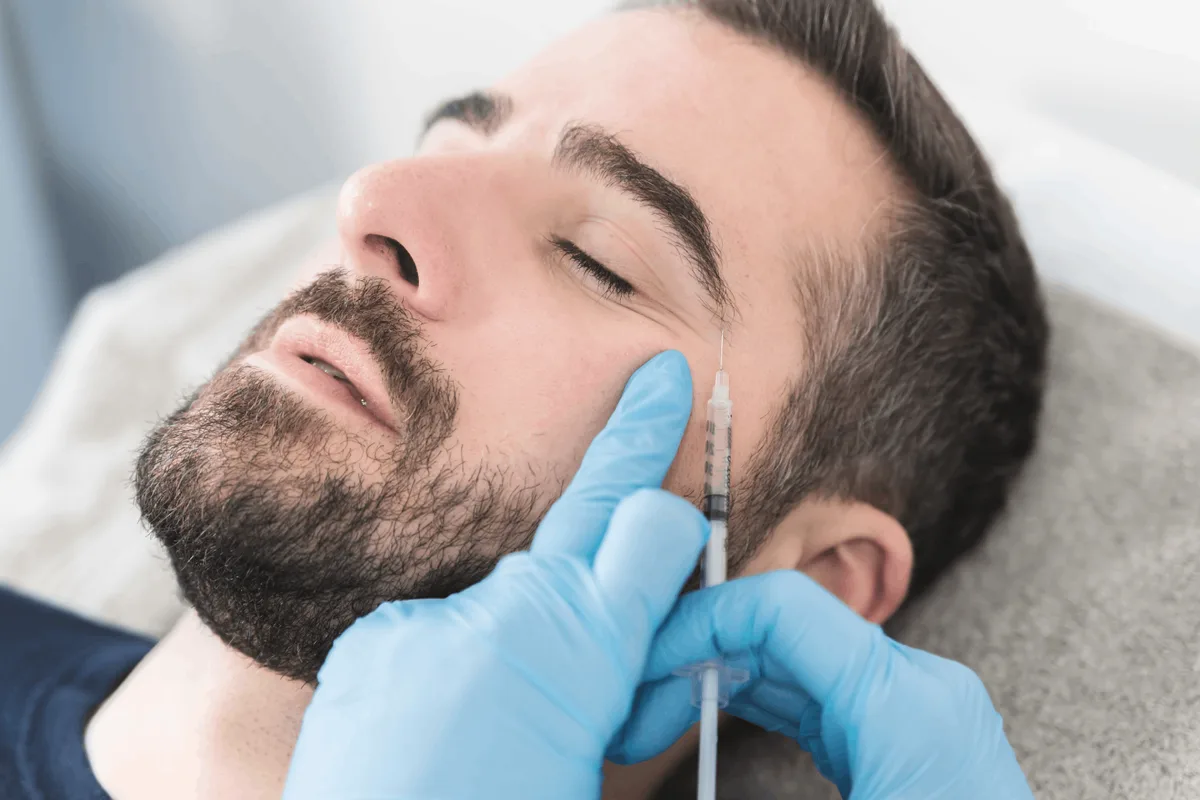
What is Dysport & what it treats
Dysport is abobotulinumtoxinA, one of the botulinum toxin type A medicines used to relax specific facial muscles. If you have typed what is Dysport into a search bar, the plain answer is a prescription injection that blocks the nerve signal a muscle needs to contract, so the skin above it creases less. You can read about the wider family it belongs to under botulinum toxin on Wikipedia.
Its cosmetic approval is narrow. On the FDA label, Dysport covers the temporary improvement of moderate to severe glabellar lines, the vertical “11s” between the brows, in adults younger than 65. Dysport was first approved in the United States in April 2009, and the same medicine is approved at far higher doses for neck and limb muscle conditions.
That surprises many first-timers, because Dysport for wrinkles elsewhere on the face is common practice. Providers do place Dysport injections in forehead lines and crow’s feet. Those uses are off-label, a choice a licensed injector is allowed to make and one you should hear named plainly at your consultation. For the muscle side in more detail, read the 4Ever Young article on how Dysport smooths wrinkles.
What Dysport cannot do is replace lost volume or lift loose skin. Lines etched deep enough to show when your face is at rest may soften only partly, and those usually call for filler or a skin treatment as well.
Dysport vs Botox for first-timers
Most people booking a first visit already know the name Botox, so Dysport vs Botox is the comparison to settle early. Both are botulinum toxin type A. Both relax the same frown muscles. Dysport’s label sets a floor of three months between treatments, and the Botox Cosmetic label notes that dosing more often than every three months has not been studied.
The differences sit in the details. Botox Cosmetic is FDA approved for four areas in adults: frown lines, crow’s feet, forehead lines and the vertical bands of the neck. Dysport is approved for one cosmetic area. Each product is measured in its own units. Dysport may also contain trace amounts of cow’s milk protein, and its label rules it out for anyone with that allergy.
For a first treatment, neither one is the safer default. Your provider weighs the areas you want treated, any allergies, your age and how you have responded to toxins before. The Botox vs Dysport guide sets onset and spread side by side, and if a newer toxin is on your list, the Jeuveau vs Dysport comparison covers that pairing.
How Dysport units are dosed
Expect to hear a bigger number than a friend quoted for Botox. It does not mean a stronger treatment.
The labeled dose of Dysport for frown lines is 50 units, given as five injections of 10 units each. For the same lines, the labeled Botox Cosmetic dose is 20 units across five points. Dysport units cannot be traded for Botox units at any fixed rate: the FDA label states that its potency units are specific to its own assay and cannot be compared to or converted into the units of any other botulinum toxin product. Conversion charts online are rules of thumb the label does not support.
Your dose is set at the visit. Before injecting, the provider asks you to frown, feels the muscle and checks your upper eyelids, because the label calls for a careful eyelid exam to lower the risk of a droop. Muscle size matters as well. Across the phase 3 trials, doses ran from 50 to 80 units, and men responded less often in the fixed-dose studies than in the one study that adjusted the dose to muscle mass.
One more rule from the label: repeat treatment should come no more often than every three months.
How long Dysport takes to work
The short answer to how long does Dysport take to work is a few days. In an analysis of the phase 3 frown line trials, run by Dysport’s US marketer at the time, participants recorded their first change at a median of 2 to 4 days, and about 1 in 5 noticed something by day 1. 4Ever Young’s Dysport page tells patients to expect noticeable results in less than a week.
The full effect takes longer to settle. In the first pivotal trial on the label, investigators rated 90 percent of treated patients as having none or mild frown lines at maximum frown by day 14, against 17 percent on placebo.
Plan around that curve. If a wedding, a photo shoot or a big presentation is on the calendar, book at least two weeks ahead so the result has time to show, and ask whether your center schedules a check-in around the two-week mark.
How long Dysport results last
So how long does Dysport last? According to the FDA label, its clinical effect may last up to four months. In that same pivotal trial, 43 percent of patients still had none or mild lines at day 90 by the investigator’s rating, and 23 percent at day 120. The softening fades gradually across that window. It does not switch off on a set date.
Some people hold longer. A 2020 systematic review of 42 studies, sponsored by the manufacturer, found duration reported most often at four months, with four studies showing an effect at five months and three at six months or later.
Dose, muscle strength and how deep the lines were to begin with all move your number. In the label’s repeat-dose studies, the effect held up across as many as four treatments, so a second visit should look like the first.
“Plan on about four months, judge the result at two weeks and book the next visit when the lines start to return.”
Dysport side effects to expect
Most Dysport side effects in the frown line trials were mild and passed on their own. In the pooled placebo-controlled studies, the most common were cold symptoms at 10 percent and headache at 9 percent, followed by pain or a reaction at the injection site at 3 percent each. Placebo patients reported many of the same complaints, just less often.
The one first-timers worry about is a drooping eyelid. Eyelid ptosis and eyelid swelling each occurred in 2 percent of patients. According to the label, most ptosis reports were mild to moderate and resolved over several weeks, and ptosis did not become more frequent with repeat treatment.
A little redness or a small bruise can show at any needle point.
Rarer effects need a phone call. Every botulinum toxin label, Dysport’s included, carries a boxed warning that the effect can spread beyond the injection area, with symptoms reported hours to weeks later. Call your provider, or get emergency care, if you notice any of these:
- Trouble swallowing, speaking or breathing
- Double vision, blurred vision or a new eyelid droop
- Muscle weakness away from the treated area
- Dry, irritated or light-sensitive eyes that do not settle
The label says the risk of spread is probably greatest in children treated for muscle spasticity, though it can also occur in adults. Precise placement by an injector who knows the anatomy around the eyes is what keeps the common effects uncommon.
Dysport aftercare for the first day
Dysport aftercare is short, and most of it covers the first 24 hours. You can usually go straight back to work or errands. 4Ever Young’s aftercare guidance for wrinkle-relaxing injections asks you to:
- Stay upright for several hours and avoid lying down right away
- Leave the treated area alone, with no rubbing, massage or facials for 24 hours
- Put off strenuous exercise, saunas and hot tubs for a day or two
- Go without makeup for the rest of the day, then apply it with a light touch
Treat these as precautions. They aim to keep the toxin where it was placed while it binds and to limit bruising, and the research behind each one is thin. For a day or two, they cost you very little.
Before the visit, ask your provider whether to pause over-the-counter pain relievers that thin the blood, fish oil or high-dose vitamin E, all of which can make bruising more likely. Never stop a prescribed blood thinner on your own. 4Ever Young also suggests skipping alcohol the day before and the day of treatment.
Drive only if you feel like yourself. The Dysport label advises against driving or other hazardous activities if muscle weakness, blurred vision or drooping eyelids appear, effects that can show up within hours to weeks.
Book with a licensed injector
Dysport is a prescription medicine, so a Dysport treatment should begin with a medical consultation. Searching Dysport near me will turn up plenty of options. Who holds the syringe, and how carefully they plan your face, matters more than the closest address.
At a 4Ever Young center, a licensed provider reviews your health history and medications, watches how your face moves and explains which areas are on-label before anything is drawn up. 4Ever Young’s Dysport page puts the injections themselves at 10 to 20 minutes.
A good first consultation covers:
- Which of your lines are on the Dysport label and which would be off-label
- How many units you need, and why
- Allergies, including cow’s milk protein, and any nerve or muscle condition
- Medicines that can strengthen the effect, such as aminoglycoside antibiotics and muscle relaxants
- When to come back, and which symptoms mean you should call
Pricing varies by center and is quoted at your consultation, once the provider knows how many units your muscles need. When you are ready, Dysport injections at 4Ever Young start with that conversation.
Your first Dysport visit starts with a consult
A licensed 4Ever Young provider maps your lines, sets your units and explains what is on-label before the first injection. Centers nationwide.
Find a CenterDysport FAQ
01Is Dysport the same as Botox?
No, though the two are close relatives. If you are asking is Dysport the same as Botox in how it works, the answer is yes: both are botulinum toxin type A and relax the same frown muscles. They differ in units, which cannot be converted between products, in approvals and in ingredients. Dysport covers frown lines in adults under 65, while Botox Cosmetic covers four areas.
02Can Dysport treat forehead lines?
It can be used there, but that use is off-label. The FDA approval for Dysport covers only the frown lines between the brows in adults under 65. Many injectors still treat forehead lines with it, and your provider should tell you when they do. If you want forehead lines treated on-label, Botox Cosmetic is FDA approved for that area.
03Who should not get Dysport?
The FDA label rules out anyone allergic to a botulinum toxin product, to cow’s milk protein or to an ingredient in Dysport, and anyone with an infection at the planned injection site. Its cosmetic label is limited to adults under 65. Pregnancy, breastfeeding and nerve or muscle conditions such as myasthenia gravis call for a careful talk with your provider first.
Still deciding whether Dysport fits your lines? Book a consultation at a center near you →
Featured From the Blog
 Featured · Injectables
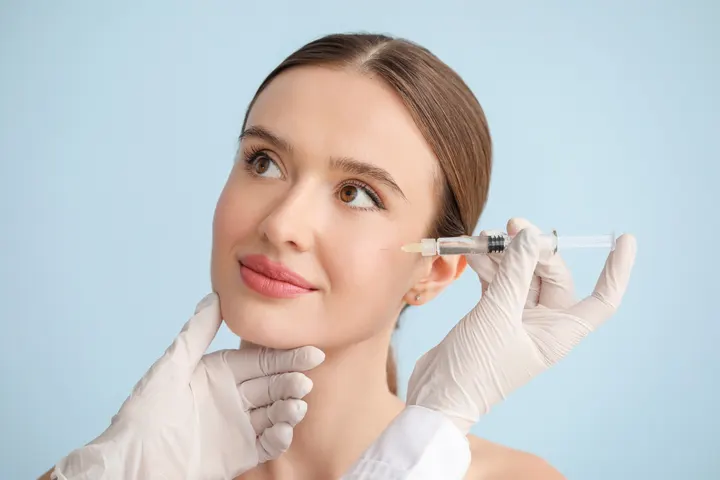
Makeup After Botox: When It’s Okay And What To Skip
When it is safe to put makeup back on after a toxin injection, how long to wait and which skincare steps and activities to skip on the first day.
Jan 4, 2026Read article →
Sources
- Dysport (abobotulinumtoxinA) Prescribing Information, DailyMed, revised October 2024 – frown line indication for adults under 65, 50 unit dose, unit non-interchangeability, onset and duration in study GL-1, adverse reactions, contraindications, driving caution
- Botox Cosmetic (onabotulinumtoxinA) Prescribing Information, DailyMed, January 2026 – four approved cosmetic areas, 20 unit frown line dose, note that dosing more often than every three months has not been clinically evaluated
- Schlessinger J et al., Dermatologic Surgery, 2011 – time to onset of abobotulinumtoxinA across phase 3 frown line trials, day 1 response, dose by muscle mass
- Nestor M et al., Journal of Clinical and Aesthetic Dermatology, 2020 – systematic review of onset and duration of abobotulinumtoxinA in the upper face