



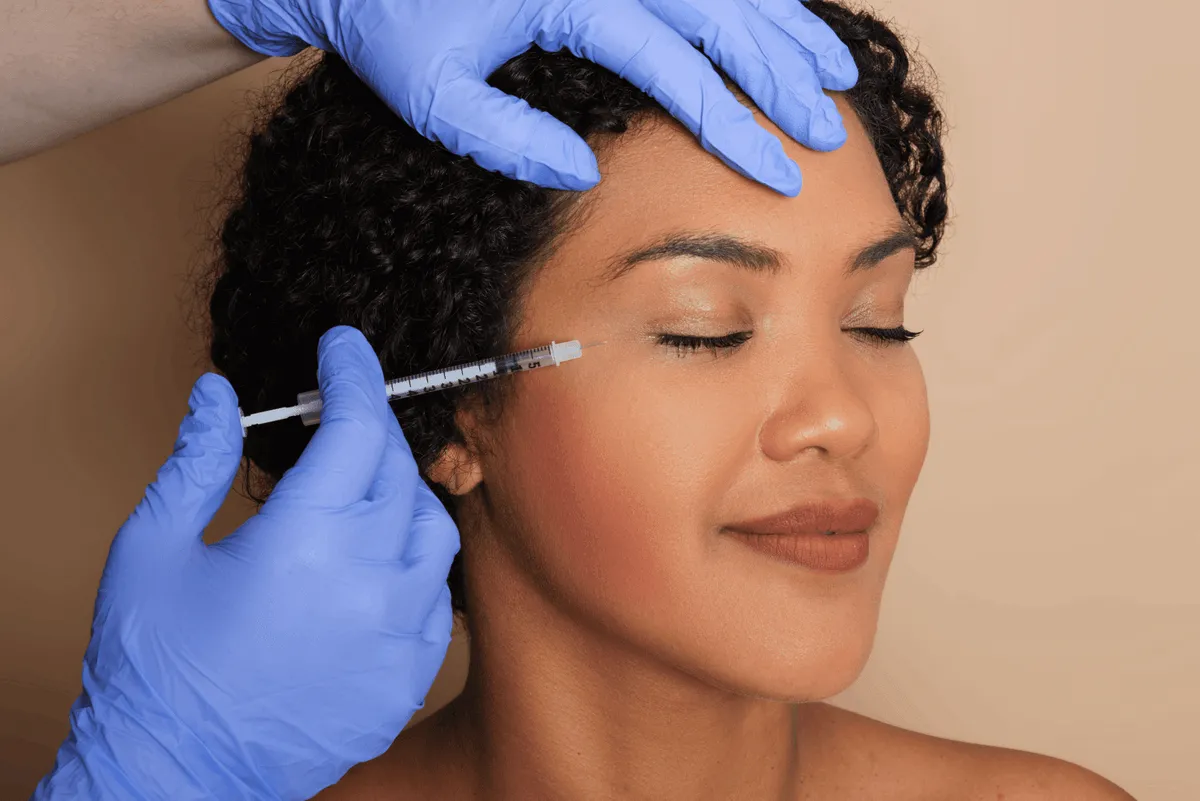
Most people get three to four months out of a Botox Cosmetic treatment before movement creeps back and lines start to show again. That window is the one the FDA label gives for frown lines, and it matches 4Ever Young’s own treatment guides. Where you land inside it, or slightly outside it, depends on the area treated, the dose, your muscles and a few habits you control.
This guide covers how long results usually hold in the three most common areas, what to bring to your appointment, and the steps and mistakes that make the biggest difference to how long your next treatment lasts.
How long Botox lasts by treatment area
The short answer to how long does Botox last is three to four months for most people. The Botox Cosmetic label puts the duration of effect for frown lines at approximately 3 to 4 months, and a 2018 review of the wrinkle research found a range of two to six months, with most patients losing the maximum effect at three to four.
Why it wears off at all comes down to how the medicine works. Botulinum toxin blocks the chemical signal a nerve sends to tell a muscle to contract. Over the following months the nerve endings recover and the signal returns, a process covered under botulinum toxin on Wikipedia. So the question of how long do Botox injections last is really a question of how quickly your nerves rebuild that connection, and that varies from person to person.
Forehead lines
How long does Botox last in forehead lines? Plan on about three to four months. Botox Cosmetic’s label pairs forehead lines with the frown lines between the brows, 20 Units in each area, to lower the chance of a heavy or drooping brow. In the two forehead line trials, people who stayed in the study were treated in up to three cycles over one year.
Fading often shows here first. Because the frontalis lifts your brows, injectors usually dose it lightly so your expression stays natural, and a lighter dose can wear off sooner. That trade is worth discussing before treatment rather than after.
Crow’s feet around the eyes
Crow’s feet are treated with 24 Units across six points, three on each side, per the label. In one of the crow’s feet trials, participants received their second treatment at day 120, roughly four months after the first. For how long does Botox last around eyes in everyday life, 4Ever Young’s own treatment guide suggests a return visit every three to five months.
Sun plays a bigger role here than anywhere else on the face. Squinting in bright light works the same muscle the treatment is relaxing, which is why some patients notice crow’s feet return a little faster in summer.
Frown lines between the brows
Frown lines, the “11s” between the brows, are the best studied area of all. In the pivotal Botox Cosmetic trials, 80 percent of treated patients were rated as having none or mild frown lines at day 30. That share fell to 48 percent at day 90 and 25 percent at day 120, while severity stayed lower than with placebo for up to 120 days.
Read those numbers as a gradual fade over the third and fourth months.
If yours fade noticeably sooner, your provider may suggest a dose change or a different neurotoxin. Dysport injections are also approved for frown lines and are offered by 4Ever Young.
What you need before your Botox appointment
A short list makes the visit faster and the plan more accurate. Bring these to your consultation for Botox injections at 4Ever Young, and see what a good Botox consultation covers if it is your first.
- Your medication list
- Vitamins & supplements
- Your last toxin date & brand
- A makeup-free face
- Upcoming event dates
- A two-week follow-up slot
Your medication list matters more than it seems. Botox’s Medication Guide asks patients to tell their provider about blood thinners, aspirin-type products, muscle relaxants, allergy and cold medicines, sleep aids and any botulinum toxin product received in the last four months. Keep taking anything prescribed unless your own doctor tells you otherwise.
Steps to make Botox last longer
Most of how to make Botox last longer happens in three places: the first day, the calendar and the sun. No habit can stretch a treatment far past its natural life. Each of these protects the result you paid for, and together they are the difference between a treatment that fades early and one that runs its full course. Skipping all three is how a three-to-four-month treatment starts to feel like a short one.
Follow Botox aftercare for the first day
Good Botox aftercare is mostly about leaving the treated areas alone while the medicine binds to the muscle. 4Ever Young’s guidance is to skip rubbing or massaging your face for at least 24 hours and to go makeup-free for the rest of the day if you can.
Save the hard workout, the facial and the long sauna for tomorrow. Many providers also ask you to stay upright for a few hours after injection. These rules are precautions rather than findings from large trials, yet they cost nothing and they guard against the one outcome nobody wants: product drifting toward a nearby muscle such as the eyelid.
Book touch-ups on a steady schedule
How often should you get Botox? Usually no sooner than every 3 months. The label states that the safety and effectiveness of more frequent dosing have not been clinically evaluated. It also notes that more frequent or higher doses may raise the chance of antibodies that make future treatments less effective. Its advice is the lowest effective dose at the longest feasible interval.
In practice that means booking when movement first returns, usually around the three-to-four-month mark, rather than waiting for the lines to set back in. 4Ever Young’s guide on how often should you get Botox breaks the timing down area by area.
Dose is part of the schedule too. A 2005 study of 80 men treated for frown lines found that duration rose as the dose went up from 20 to 80 Units, and stronger muscles generally need more. A dose matched to your face may last longer than the bargain dose, which is one reason the 4Ever Young membership plans include member rates on tox and a 4Ever Reserve option that adds $99 a month to a service bank for your next visit.
Protect skin from sun & heat
Sunscreen will not change how long the medicine works in the muscle, but it changes how your skin looks while it does. In a randomized trial of 903 adults in Australia, people who applied broad-spectrum sunscreen daily showed no detectable increase in skin aging over four and a half years, and 24 percent less aging overall than people who used it when they felt like it.
Daily SPF, sunglasses and a hat also cut down on squinting, which keeps the muscles around your eyes from working against the treatment. Keep the first day cool as well. Hot yoga, steam rooms and long sun exposure right after injection are on most providers’ skip list.
One question comes up at nearly every visit: does zinc help Botox last longer? The evidence is thin. A 2012 pilot study of 77 patients reported that 92 percent of those taking 50 mg of zinc citrate with phytase before treatment had effects last nearly 30 percent longer, but the trial ended early after its blinding broke, and a 2014 analysis found design problems serious enough to question the conclusion. Treat zinc as unproven, and ask your provider before adding a high-dose supplement.
Plan your next treatment before this one fades
A 4Ever Young provider can set your dose and your return date in one visit. Centers nationwide.
Find a CenterMistakes that shorten Botox results
Most short-lived results trace back to a handful of avoidable habits.
- Booking a touch-up at day five. Botox starts working within one to two days and keeps building through the first week. Judge the result at two weeks, then ask about adjustments.
- Choosing the smallest possible dose to save money. Fewer units than your muscles need tends to wear off sooner, so the savings rarely last.
- Treating more often than every three months. Frequent dosing is untested on the label and may raise the risk of antibodies that blunt future treatments.
- Rubbing, pressing or massaging the area on day one, including a facial or a firm makeup blend.
- Switching products or clinics without sharing your history. Your injector needs to know which toxin you had and when.
- Skipping sunscreen and sunglasses, which leaves your skin aging and your crow’s feet squinting through the treatment.
No single mistake ruins a result. Each one trims a little off the end.
Botox longevity FAQ
01How Long Does It Take for Botox to Work?
How long does it take for Botox to work? The label says the treated muscles begin relaxing one to two days after injection, with the effect building through the first week. Most people see lines soften within three to five days and the full result at about two weeks, the timeline 4Ever Young’s own treatment guide gives.
02Does Dysport Last Longer Than Botox?
Does Dysport last longer than Botox? By the labels, the two are close: Botox Cosmetic reports results for frown lines for up to 120 days, Dysport for up to four months. Dysport sets re-treatment at no more than every three months, and Botox has not been evaluated at shorter intervals. One 20-person split-forehead study measured complete efficacy at 72 days for Dysport and 56 for Botox, a small edge from a small sample.
03Does Botox Last Longer the More You Get It?
Does Botox last longer the more you get it? Possibly, though the proof is limited. A small 2026 study treated the frown muscles of 21 women for two years and found muscle activity still below baseline 48 weeks after the last injection. Some of its intervals were shorter than the label allows, so the authors called for larger studies before anyone treats this as settled.
Not sure when your next treatment should be? Book a consultation →
Featured From the Blog
 Featured · Injectables
Makeup After Botox: When It’s Okay And What To Skip
How long to wait before wearing makeup after Botox, why rubbing and pressure matter on day one, and how to apply products gently once you can.
By Claritza Valle · Jan 4, 2026Read article →
Sources
- BOTOX Cosmetic (onabotulinumtoxinA) prescribing information and Medication Guide, DailyMed – Approved areas and doses, 3 to 4 month duration for frown lines, day 30 to day 120 responder rates, the 3-month re-treatment floor, antibody guidance, medicines to disclose
- Dysport (abobotulinumtoxinA) prescribing information, DailyMed – Frown line duration of up to four months and the re-treatment interval
- Wright G, Lax A, Mehta SB, British Dental Journal, 2018 – Review of how long botulinum toxin lasts in wrinkle treatments: two to six months, most three to four
- Carruthers A, Carruthers J, Dermatologic Surgery, 2005 – Dose-ranging study in 80 men: duration of effect rose with dose
- Nestor MS, Ablon GR, Journal of Clinical and Aesthetic Dermatology, 2011 – Split-forehead study: complete efficacy 72 days with Dysport vs 56 days with Botox
- Ahmed MB et al., Aesthetic Surgery Journal, 2026 – Two years of repeated glabellar injections in 21 women and muscle activity afterward
- Koshy JC et al., Journal of Drugs in Dermatology, 2012 – Zinc and phytase pilot study in 77 patients
- Cohen JL, Journal of Cosmetic and Laser Therapy, 2014 – Critique of the zinc and phytase study’s design
- Hughes MC et al., Annals of Internal Medicine, 2013 – Randomized trial of daily sunscreen and skin aging in 903 adults