



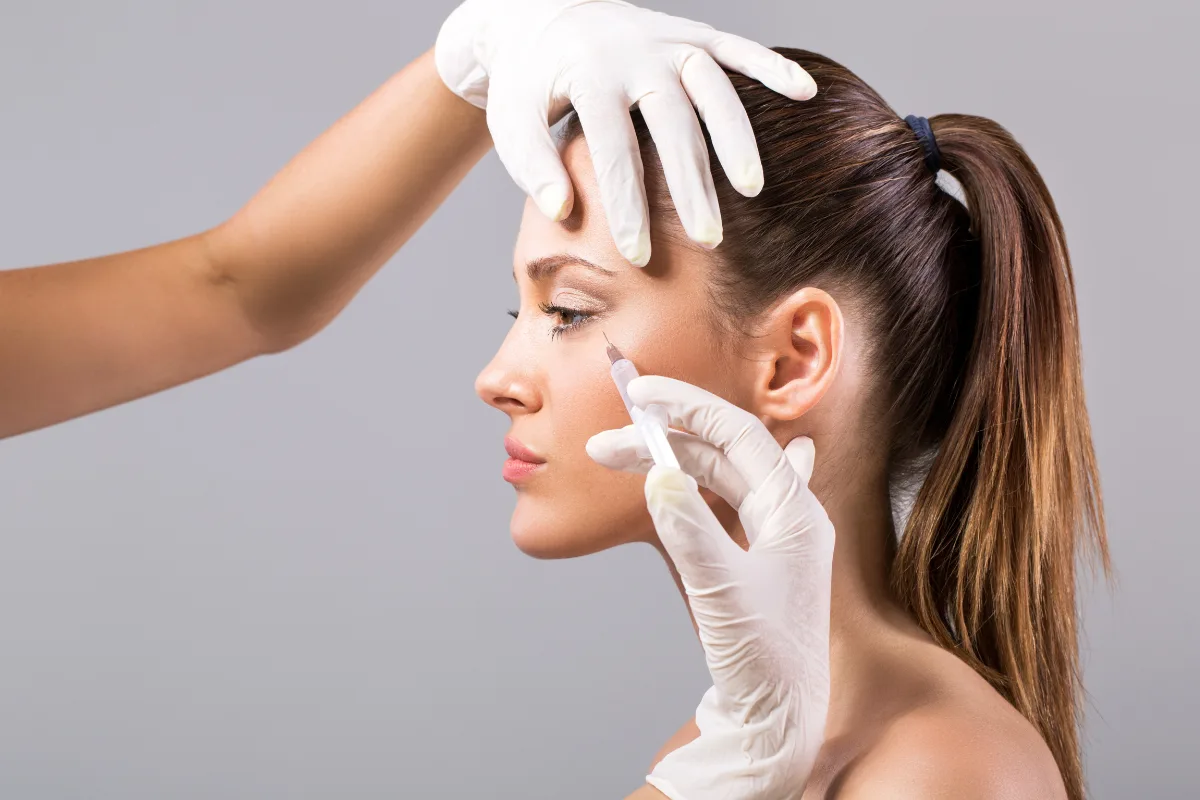
Botox and Xeomin are two brands of the same active protein, botulinum toxin type A, placed into the same small muscles of the upper face. In trials, their results on frown lines looked alike. Where they differ is the label and the vial: the areas each one is approved for, what travels with the toxin, how fast it started in head-to-head testing and how each one is dosed. 4Ever Young providers inject both.
Botox vs Xeomin: the real difference
The Botox vs Xeomin question has a short answer. They work the same way, reach full effect within a couple of weeks and wear off on a similar schedule. A 381-patient trial found Xeomin noninferior to Botox for frown lines, with 96.4 percent and 95.7 percent of patients responding at week four. A 2017 systematic review of 15 comparative trials, co-written by Merz staff, reached the same conclusion for aesthetic use overall: similar efficacy.
Three differences hold up.
- Approved areas. Botox Cosmetic carries four on its FDA label: frown lines, crow’s feet, forehead lines and neck bands. Xeomin carries the same upper face set, minus the neck.
- What is in the vial. Botox is the toxin plus accessory proteins. Xeomin is the toxin alone.
- Speed. In a 180-person randomized trial, Xeomin began working about two days sooner. That finding comes from a single study.
Both labels treat forehead lines only together with the frown lines between the brows, never on their own. Per the Botox label, pairing the two areas minimizes the potential for brow ptosis, a heavy or drooping brow.
What is Xeomin & why it has no accessory proteins
So what is Xeomin? It is incobotulinumtoxinA, a prescription botulinum toxin type A made by Merz. Botox Cosmetic is onabotulinumtoxinA, made by Allergan Aesthetics, an AbbVie company. Both deliver the same 150 kDa core neurotoxin, the part that actually relaxes the muscle.
According to the Xeomin DailyMed prescribing information, Merz separates the toxin during manufacturing from the hemagglutinin and non-hemagglutinin proteins that form around it, leaving the active neurotoxin without accessory proteins. Botox Cosmetic, by its label, is a complex of the neurotoxin and several accessory proteins, about 900 kDa in total by one 2025 estimate. You would only see that difference in storage: unopened Xeomin vials can sit at room temperature, while Botox stays in the refrigerator.
Why does any of this matter to you? Botox resistance. A small number of patients stop responding to a toxin after repeated treatments, and in some of them the immune system has made neutralizing antibodies against it. A 2025 review in JMIR Dermatology lists complexing proteins as one suspected trigger, along with injections spaced less than three months apart, high cumulative doses and booster shots within three weeks of a treatment. It also stresses how little data exist for cosmetic patients.
At cosmetic doses, antibodies are uncommon with either product. None of 916 tested patients in the Botox crow’s feet trials developed neutralizing antibodies, and none of 464 did in the Xeomin frown line trials. Both labels caution that antibody rates from different studies cannot be fairly compared, so neither number proves one product safer here. 4Ever Young’s Xeomin page words it with care: the purified formula may reduce the risk of resistance over time.
Xeomin vs Botox at a glance
Every clinical row in this Xeomin vs Botox table comes from the current FDA prescribing information on DailyMed or from the 2013 trial, checked November 3, 2026. The side effect row reflects each product’s frown line trials.
| Category | Botox Cosmetic | Xeomin |
|---|---|---|
| Active ingredient | OnabotulinumtoxinA | IncobotulinumtoxinA |
| Accessory proteins | Yes, a toxin complex | ✓ None, toxin only |
| Frown lines | FDA approved | FDA approved |
| Crow’s feet | FDA approved | FDA approved |
| Forehead lines | Approved with frown lines | Approved with frown lines |
| Neck bands | ✓ FDA approved | Not approved |
| Frown line dose | 20 Units, 5 sites | 20 Units, 5 sites |
| Upper face dose | 64 Units | 64 Units |
| Onset, per label | 1 to 2 days, builds over week one | Median 2 to 7 days |
| Onset, 2013 trial | 5.29 days in women | ✓ 3.02 days in women |
| Duration, per label | About 3 to 4 months | Up to 12 to 16 weeks |
| Retreatment | Under 3 months not evaluated | At least 3 months apart |
| Neutralizing antibodies | 0 of 916 tested | 0 of 464 treated |
| Top side effect | Eyelid droop, 3% | Headache, 5% |
| Vial storage | Refrigerated | Room temperature |
| At 4Ever Young | ✓ Yes | ✓ Yes |
Two of the most searched questions, how long does Botox take to work and how long does Xeomin take to work, get label answers that sound different because they measure different things. Botox’s label describes when the muscle starts to weaken, while Xeomin’s gives a median onset window.
A 2013 trial timed them side by side in 180 adults, giving 21 Units of Xeomin or Botox, or a Dysport comparison dose. Women reached onset at a median of 3.02 days on Xeomin and 5.29 days on Botox, and men ran a little slower on both. Its lead author had done speaking work for Merz, which is worth keeping in mind.
On Xeomin units vs Botox units, the labels are blunt. Each says its units cannot be compared to or converted into units of any other botulinum toxin product. Matching 20 Unit frown line doses do not make the units equal, even though both of the trials above compared the products at a 1:1 ratio. Your provider plans each product in its own units.
Who Botox is the better fit for
Botox Cosmetic tends to be the better choice in a few clear situations.
- Neck bands are on your list. Of the two, only Botox Cosmetic is FDA approved for moderate to severe platysma bands.
- Botox already works well for you. A product that suits your muscles is a sound reason to stay.
- You plan other uses that 4Ever Young lists on its Botox page, such as underarm sweating, jaw (masseter) treatment or a gummy smile. Severe underarm sweating is FDA approved under the separate Botox label, while jaw and gummy smile treatment are off-label, so ask your provider how each one is handled.
A provider offering Botox treatment at 4Ever Young watches how your muscles move before choosing the dose and the injection points. 4Ever Young’s Botox guide notes that the full effect usually arrives by the second week, so book at least two weeks before a big event.
Who Xeomin injections fit best
Xeomin injections make the most sense for a slightly different patient.
- You prefer a formula with no accessory proteins, especially if you expect years of regular treatment.
- Your goals stop at the upper face. Xeomin covers frown lines, forehead lines and crow’s feet, up to 64 Units in one session.
- A quick start matters. In the one trial that timed it, Xeomin took effect about two days sooner.
- A previous toxin seemed to fade faster or work less over time. Switching is worth discussing, though the evidence is limited, as the FAQ below explains.
4Ever Young’s Xeomin page also mentions bunny lines, chin dimpling and neck bands. Those uses are off-label for Xeomin, which is FDA approved for the three upper face areas only, so your provider will talk through any of them with you.
A visit for Xeomin injections at 4Ever Young typically takes 10 to 15 minutes with no downtime, according to the center’s Xeomin page.
Find out which option fits your goals
A 4Ever Young provider studies how your brows, forehead and eyes move, then chooses Botox or Xeomin and the dose in one consultation.
Book a ConsultationBotox or Xeomin verdict for touch-ups
For touch-ups, call it even. How long does Botox last? Its label puts the effect on frown lines at approximately 3 to 4 months. In the two pivotal trials, 48 percent of patients still had no lines or mild lines at maximum frown on day 90, and 25 percent did on day 120.
How long does Xeomin last? Its label gives a typical duration of up to 12 to 16 weeks, and 4Ever Young’s Xeomin page says up to 3 to 4 months. In the 2013 head-to-head trial, frown muscle activity in women returned at a median of about 140 to 146 days, and the toxin a person received made little statistical difference.
Each label words the minimum gap differently. Xeomin’s says to administer retreatment no more frequently than every three months. The Botox Cosmetic label says the safety and effectiveness of dosing more frequently than every 3 months have not been clinically evaluated. Because short gaps and early boosters are among the suspected triggers for resistance, a steady rhythm of three months or longer is the sensible habit with either one.
Muscle strength, dose and treatment history set your own interval. The 4Ever Young guide on how often to get Botox walks through a typical schedule.
Look your best & feel your best in one place
4Ever Young centers offer injectables alongside facials, hormone therapy and IV drips, so your touch-ups can fit inside a bigger plan.
Book a ConsultationBotox & Xeomin questions patients ask
01How long does Xeomin take to work?
Most people notice softening within a few days. The Xeomin label puts median onset at two to seven days, and 4Ever Young’s Xeomin page describes first changes at 3 to 4 days with the full effect by 7 to 10 days. In a 2013 trial, Xeomin reached onset at a median of 3.02 days in women, about two days ahead of Botox.
02How long does Botox last?
About three to four months for most people. That is the duration the Botox Cosmetic label gives for frown lines, and its trials tracked improvement out to 120 days. Strong muscles or a lower dose can shorten it. The label also notes that dosing more often than every 3 months has not been clinically evaluated, so touch-ups usually follow that rhythm.
03Are Xeomin units the same as Botox units?
No. Both FDA labels state that their units cannot be compared to or converted into units of any other botulinum toxin. Each label sets 20 Units for frown lines, and studies often compare them one to one, but your provider plans each product in its own units, based on how strong your muscles are.
04Can switching to Xeomin help with Botox resistance?
Sometimes, though the evidence is limited. Resistance caused by neutralizing antibodies is rare at cosmetic doses, and a 2025 review lists dose, technique and timing among other reasons results fade. That review describes one small study in which 30 percent of Botox nonresponders responded after switching to Xeomin, and four other reported patients who saw no effect. Ruling out simpler causes comes first.
Xeomin side effects in the upper face trials were uncommon, with bruising at the injection site the most frequent. Before your visit, the Botox consultation checklist shows what a good provider covers. Book a consultation →
Featured From the Blog
 Featured · Injectables
What Is Botox? A Comprehensive Guide
How Botox blocks the nerve signal behind expression lines, when results tend to show and fade, and what ongoing treatment looks like.
Jun 6, 2025Read article →

Sources
- Botox Cosmetic (onabotulinumtoxinA) Prescribing Information, DailyMed, revised October 2024 – approved areas, doses, onset and duration, retreatment wording, unit language, antibodies, adverse reactions, storage
- Xeomin (incobotulinumtoxinA) Prescribing Information, DailyMed, revised July 2026 – upper facial line indications, forehead lines with glabellar lines, doses, onset, duration, retreatment, unit language, antibodies, adverse reactions, storage
- Rappl T et al., Clinical, Cosmetic and Investigational Dermatology, 2013 – onset and duration of incobotulinumtoxinA, onabotulinumtoxinA and abobotulinumtoxinA in 180 adults
- Sattler G et al., Dermatologic Surgery, 2010 – noninferiority of incobotulinumtoxinA to onabotulinumtoxinA for frown lines in 381 patients
- Prager W et al., Dermatologic Surgery, 2017 – systematic review of 15 comparative aesthetic trials of incobotulinumtoxinA
- Kroumpouzos G, Silikovich F, JMIR Dermatology, 2025 – secondary nonresponse in aesthetics, trigger factors, complexing proteins and switching outcomes
- Botox (onabotulinumtoxinA) Prescribing Information, DailyMed, August 2026 – severe primary axillary hyperhidrosis indication under the Botox (therapeutic) label