



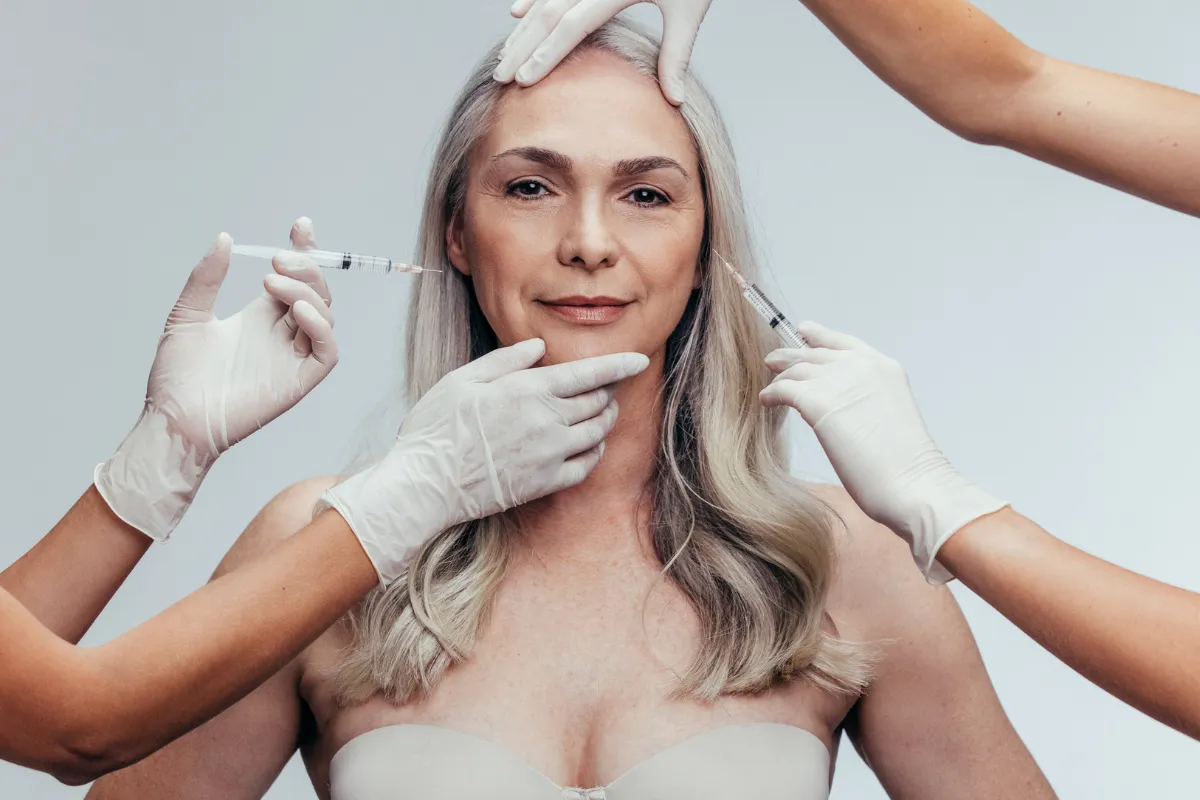
People often weigh these two as if one has to win. They barely overlap. Botox Cosmetic works on muscle, a dermal filler works on volume, and the line you want gone decides which one you need. Sometimes the honest answer is both.
Botox vs fillers verdict by concern
The quickest way to settle Botox vs fillers is to look at your face when it is still. A crease that shows only when you frown, squint or lift your brows is a dynamic line, and Botox is the right first step. If the line stays when your face is relaxed, or the real problem is flat cheeks, thinner lips or a hollow under the eye, filler is the tool.
- Forehead lines, frown lines between the brows, crow’s feet: Botox.
- Smile lines from the nose to the mouth, marionette lines, thin lips: filler.
- Flat cheeks, under-eye hollows, a softer jawline: filler, chosen for the area.
- Deep frown lines that stay at rest: often both, Botox to stop the crease and filler to lift what is left, although filler between the brows is off-label.
Your provider reads your face at rest and in motion before recommending either one, which is why Botox treatment at 4Ever Young starts with a consultation rather than a menu.
Fillers vs Botox at a glance
Here is fillers vs Botox row by row. Every figure comes from the current Botox Cosmetic label on DailyMed, the FDA’s dermal filler guidance or 4Ever Young’s own treatment guides, checked October 21, 2026.
| Category | Botox Cosmetic | Dermal fillers |
|---|---|---|
| What it is | OnabotulinumtoxinA, a prescription neurotoxin | Gel implants regulated as medical devices, most made of hyaluronic acid |
| How it works | Relaxes the muscle that creases the skin | Adds volume under a line, fold or hollow |
| Best at | ✓ Lines that show when you move | ✓ Lines at rest & lost volume |
| FDA-approved areas | Frown lines, crow’s feet, forehead lines, neck bands | Smile lines, lines around the mouth, lips, cheeks, chin, back of the hands, by product |
| When results show | Within the first week | ✓ Right away, settling over about two weeks |
| How long results last | Up to 120 days for frown lines in trials | ✓ 6 to 18 months, by product & area |
| Retreatment | Not studied more often than every 3 months | When volume fades |
| If you change your mind | Wears off over a few months | ✓ Hyaluronic acid gels are the easiest fillers to reduce |
| Most common side effects | Eyelid droop in 3% of frown line patients | Bruising, redness, swelling & tenderness |
| How it is priced | Per unit, varies by center | Per syringe, varies by center |
| Offered at 4Ever Young | ✓ Yes, with member discounts | ✓ Yes, Juvéderm, Restylane, Versa & Sculptra |
Filler figures spread wider because filler is a category, not one product. A thin gel made for fine lines and a firm gel made to lift a cheekbone behave very differently, and the FDA reviews each one for specific areas of the face.
How Botox & dermal fillers compare side by side
The difference between Botox and fillers starts with what each one is. Botox Cosmetic is a prescription drug. A filler is a medical device implant, and the FDA guide to dermal fillers treats it as one: approved for adults over 21, for set areas, and best placed by a licensed provider trained to inject them. Comparing dermal fillers vs Botox, then, is really comparing a medicine that changes what a muscle does with a material that changes what is under the skin.
What each treatment does under the skin
Botox blocks the release of acetylcholine, the chemical signal that tells a muscle to contract. The treated muscle relaxes for a few months and the skin over it stops folding into the same crease thousands of times a day. Nothing is added.
Filler works the other way around. A hyaluronic acid gel, made from a sugar your skin already produces to hold water, props a fold up from below or restores the support that fat and bone lose with age. Collagen-stimulating fillers such as Sculptra work more slowly, prompting your own collagen over several weeks. 4Ever Young’s guide to Dermal fillers for facial volume loss covers the main filler materials in more depth.
Lines each treatment smooths best
Botox for forehead wrinkles is the textbook muscle-driven case. The Botox Cosmetic label covers four areas: frown lines between the brows, crow’s feet, forehead lines and the vertical bands of the neck. Each has its own labeled dose, from 20 Units across five points for frown lines to 40 Units when the forehead and frown area are treated together.
Fillers for smile lines are the textbook static case. The nasolabial fold, which runs from the side of the nose to the corner of the mouth, forms as volume shifts downward with age. There is no muscle to relax there. The FDA lists nasolabial folds and the fine lines around the lips among the approved uses for absorbable fillers.
Some lines sit in between. A frown line that has folded for twenty years can stay etched even at rest, and Botox alone may only soften it. In a 38-patient trial by Jean and Alastair Carruthers, women with moderate to severe frown lines who received Botox plus a hyaluronic acid filler held their correction for a median of 32 weeks, compared with 18 weeks for filler alone. The FDA lists filler between the brows as an unapproved use, so that pairing is off-label.
Volume loss & facial contour
Only filler restores volume. Cheeks that have flattened, lips that have thinned and the hollow that forms between the lower lid and the cheek all respond to added support, and Botox has nothing to give them.
Under eye filler calls for extra care. The skin there is thin and the blood vessels sit close to the surface. Only some fillers, such as Juvéderm Volbella XC and Restylane Eyelight, are FDA approved for under-eye hollows, so choose an experienced injector who works with a gel approved for the area. 4Ever Young’s Under eye filler guide explains what that visit involves.
For the cheeks, lips, chin and folds, 4Ever Young works with several filler families. Juvederm filler options run from softer gels for the lips to firmer ones for the cheeks and jawline, and Restylane fillers and Versa bring their own lineups.
Results duration & upkeep
Botox fades first. In the label’s pivotal frown line trials, investigators rated the frown lines of 74 percent of treated patients none or mild at day 7, and 80 percent at day 30, and the advantage over placebo lasted up to 120 days. The label also says dosing more often than every 3 months has not been clinically evaluated, so most patients plan three or four visits a year.
Fillers hold longer, and the range is wide. 4Ever Young’s filler guide puts most results at 6 to 18 months, with hyaluronic acid gels averaging about a year. The product, the area and your own metabolism all move that number.
Cost per visit
Botox vs fillers cost depends on how each is priced. Botox is charged per unit and filler per syringe, and both prices vary by center, so your local 4Ever Young center quotes current rates at the consultation. A frown line treatment typically uses about 20 units of Botox, while a filler treatment is counted in syringes.
Per visit, filler costs more. Over a year the totals can come closer, because Botox repeats every few months while a syringe of filler may last a year or longer. A 4Ever Young membership adds 10 to 20 percent off most services and the best rates on tox, and your exact quote follows the consultation.
Lines, hollows or both?
A 4Ever Young provider watches your face at rest and in motion, then matches each concern to Botox, filler or both in one visit.
Book a ConsultationWho should choose Botox or fillers
Botox is usually the better fit when:
- Your lines appear when you move and fade when your face is still.
- The forehead, the space between the brows or the corners of the eyes bother you most.
- You want to soften a line before it settles into the skin, and you are comfortable returning every few months.
Filler is usually the better fit when:
- The line is there at rest, like a smile line or a marionette line.
- Your cheeks, lips or under-eye area have lost volume.
- You want a change you can see the same day and fewer visits a year.
Photos make the difference plain. In Botox vs fillers before and after pictures, Botox results show smoother skin when the face moves while its shape stays the same. Filler results show the shape itself changed: fuller cheeks, a shallower fold, a defined lip. Still torn between Botox or fillers? Your provider can watch you frown, smile and rest, then point to where each line comes from.
Bottom line on combining treatments
Past the mid-thirties, most faces show both kinds of aging at once: movement lines on the upper face, volume loss lower down. That is why Botox and filler are so often booked together, and 4Ever Young’s filler guide notes the two can be done in the same appointment.
Start with the concern that bothers you most and treat it with the tool built for it. Add the other only if a line remains.
The provider worth trusting tells you which lines need Botox, which need filler and which need nothing at all.
Botox vs fillers questions patients ask
01Is Botox the Same as Fillers?
No. Is Botox the same as fillers? Botox Cosmetic is a prescription neurotoxin that relaxes the muscle behind a line. Dermal fillers are FDA-regulated gel implants, most made of hyaluronic acid, that add volume under the skin. Botox suits frown lines, forehead lines and crow’s feet, while fillers suit smile lines, thin lips and flat cheeks.
02Can You Get Botox & Fillers the Same Day?
In most cases, yes. 4Ever Young’s dermal filler guide notes the two can be done in the same appointment, and a 2003 trial found that moderate to severe frown lines treated with Botox plus filler held their correction for a median of 32 weeks, against 18 weeks with filler alone. The FDA notes that fillers combined with Botox have not been safety tested in a controlled study, so your provider decides the order and the areas.
03Which Lasts Longer, Botox or Fillers?
Fillers. How long do fillers last? Most hold for 6 to 18 months depending on the product and the area, with hyaluronic acid gels averaging about a year, per 4Ever Young’s filler guide. Botox Cosmetic reduced frown lines for up to 120 days in its pivotal trials, so most patients repeat it every three to four months.
Not sure which one your lines need? Book a consultation at a center near you →
Featured From the Blog
 Featured · Injectables
The Ultimate Guide to Juvéderm Fillers: Benefits, Cost, and Results
How the Juvederm family of hyaluronic acid fillers works, from thin gels for fine lines to firmer gels for cheeks, and what results and costs to expect.
By Claritza Valle · Aug 1, 2025Read article →
Sources
- DailyMed, BOTOX Cosmetic (onabotulinumtoxinA) prescribing information, revised 10/2024 – approved areas, labeled doses, day 7 to day 120 trial results, 3-month retreatment interval, most common side effects
- U.S. Food and Drug Administration, Dermal Fillers (Soft Tissue Fillers) – approved uses and ages, unapproved areas including between the brows, untested combination with Botox, common risks, removal of hyaluronic acid versus permanent fillers
- U.S. Food and Drug Administration, PMA P110033/S053, Juvederm Volbella XC, 2021 – approval for infraorbital hollowing in adults over 21
- U.S. Food and Drug Administration, PMA P040024/S135, Restylane Eyelight, 2023 – approval for infraorbital hollowing in patients over 21
- Carruthers J, Carruthers A, Dermatologic Surgery, 2003 – Botox plus hyaluronic acid filler versus filler alone for moderate to severe frown lines, 38 patients
- 4Ever Young, Understanding the Cost of Botox – typical Botox price per unit
- 4Ever Young, Dermal Fillers for Facial Volume Loss: Benefits, Results, and Safety – filler duration, price per syringe, same-day treatment with Botox
- 4Ever Young, Membership – member discounts and tox rates