



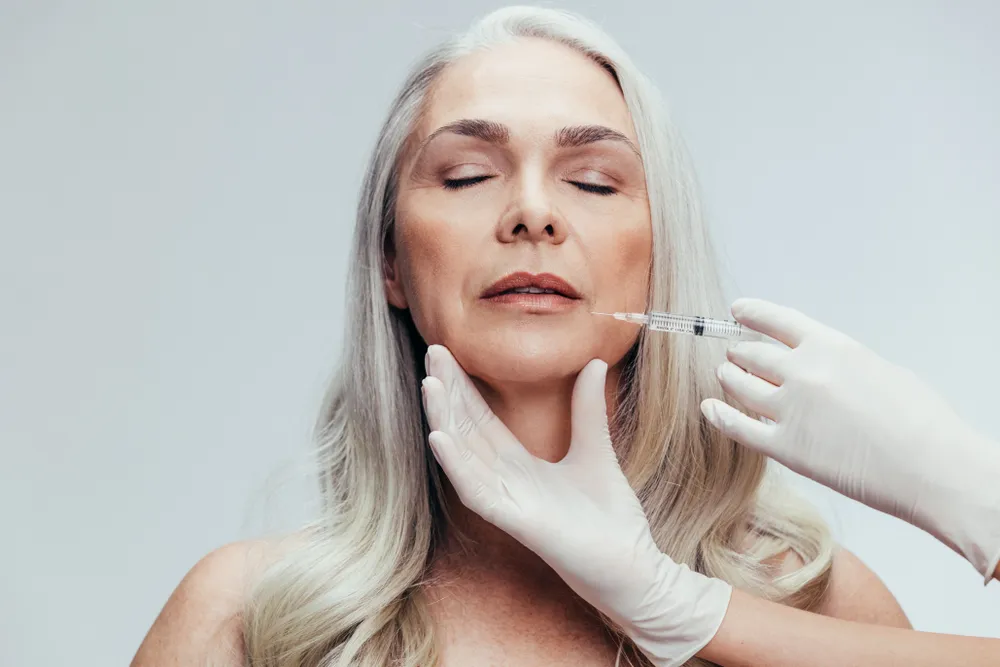
Smile lines rarely appear overnight. Most people first notice them in photos, then one day the two creases from the nose to the corners of the mouth are there at rest, with no smile at all. They can be softened a great deal. Making them disappear is a different promise, and no honest provider makes it.
The approach that works best treats the fold as the last link in a chain: a cheek that has lost volume, skin that has lost collagen, and years of sun. Fix the links in the right order and the line follows.
What causes smile lines
Smile lines are the folds that run from the outer edge of each nostril down to the corners of the mouth, known medically as nasolabial folds. So what are smile lines, really? They mark the border where the fuller cheek meets the thinner skin of the upper lip, which is why everyone has them, even children. The nasolabial fold on Wikipedia notes that with age the fold may grow in length and depth.
The crease itself is seldom the real problem. Three slower changes deepen it:
- Midface volume loss. The fat pads in the cheeks thin and settle lower, and the bone underneath gradually recedes, so the cheek sits heavier against the fold.
- Collagen decline. Skin produces less collagen and elastin with each decade, so it creases more easily and holds the crease longer.
- Sun and smoke. The American Academy of Dermatology says the sun plays a major role in premature skin aging and that smoking greatly speeds it up.
Expression plays a supporting role. Smiling folds the cheek over the same line thousands of times, and the AAD points out that muscles contracted repeatedly for many years leave lines that become permanent. Fast weight loss can deepen the fold too, because it takes cheek volume with it.
Knowing what causes smile lines changes the treatment plan. When volume loss above the fold is the main driver, filling only the crease can make the lower face look heavy. The 4Ever Young guide to fillers for facial volume loss explains how that midface support changes with age.
What you need before smile lines treatment
A good smile lines treatment plan starts with an assessment of your whole face, not a syringe count. Your provider will ask about medicines and supplements that affect bruising and about any history of cold sores. Bring:
- Photos from 10 years ago
- Your medication list
- Cold sore history
- Two weeks before any event
- A realistic budget
Steps to soften smile lines
There is no single answer to how to get rid of smile lines, because the fold comes from several layers at once. 4Ever Young providers usually work from the top down: support the cheek, fill what remains, improve the skin over the fold, then protect it, and many patients need only two or three of those steps. Which ones depends on what your consultation shows about the cheek, the depth of the crease and the quality of the skin over it.
Restore cheek volume with filler
When the cheek has flattened, volume placed high on the cheekbone lifts the tissue that hangs over the fold. The FDA approved Juvederm Voluma XC on October 22, 2013 for deep injection to correct age-related volume deficit in the midface, a separate approval from the fold products in step two.
Supporting the cheek first usually means less product in the fold itself.
That keeps the skin around the mouth soft when you talk and laugh. At 4Ever Young, Juvederm filler for smile lines covers the whole family, from Voluma for the cheeks to softer gels such as Ultra Plus and Vollure for the fold, in sessions of 20 minutes to an hour.
Fill deep smile lines directly
Deep smile lines that remain after the cheek is supported respond to a filler for smile lines placed along the fold, the use the FDA approved first. Restylane was approved on December 12, 2003, and Juvederm on June 2, 2006, both for moderate to severe facial wrinkles and folds such as nasolabial folds.
Restylane filler treatments and Revanesse Versa are the other hyaluronic acid options on the 4Ever Young menu, and 4Ever Young’s Versa page describes it as FDA approved for moderate to severe wrinkles and folds, especially the nasolabial folds. Hyaluronic acid holds water, so the fold looks smoother the same day, and the full effect settles over about two weeks.
How long does it last? A 2021 meta-analysis of randomized trials in Aesthetic Plastic Surgery pooled wrinkle severity scores on a five-point scale: 3.23 before treatment, 1.79 at one month, 2.02 at six months and 2.46 at a year.
Most of the improvement holds through six months, and part of it is still there at twelve.
See which layer your lines need first
A 4Ever Young provider checks your cheeks, the fold and your skin in one visit, then builds the plan in that order.
Find a CenterRebuild collagen with microneedling
Filler works under the fold. Microneedling works on the skin over it. A pen of fine needles creates controlled micro-channels, and the skin answers by making new collagen over the following weeks, which can soften etched creases and improve texture around the mouth.
SkinPen Precision, the device behind microneedling treatments at 4Ever Young, received FDA De Novo authorization on March 1, 2018 for facial acne scars. The FDA has also authorized some microneedling devices to improve the appearance of facial wrinkles in adults 22 and older.
Plan on a series rather than one visit. 4Ever Young recommends recurring SkinPen sessions over four to six months, each about an hour with numbing cream first. Skin can feel tight or sunburned for a few hours afterward.
Microneedling refines the shallow, etched part of a smile line. It cannot lift a heavy cheek, so it does its best work alongside the first two steps.
Protect skin with daily prevention
This is where people look for how to get rid of smile lines naturally, and the honest answer is that home care cannot erase a fold. It can slow the skin damage that deepens it and keep treatment results looking fresh longer.
- Sunscreen every morning. The AAD recommends a broad-spectrum, water-resistant sunscreen with SPF 30 or higher on all skin not covered by clothing.
- A retinoid at night. Tretinoin is the most studied retinoid for sun-aged skin, and a 2006 review in Clinical Interventions in Aging found its benefit on fine wrinkling builds slowly over many months. Some dryness or stinging is common at the start.
- No smoking. According to the AAD, smoking greatly speeds up how quickly skin ages.
- A daily moisturizer and a steady weight. Moisturizer traps water in the skin for a more youthful look, and avoiding big swings in weight protects the cheek volume that holds the fold up.
Mistakes that make lines look worse
A few common choices make smile lines more noticeable. Avoid them if you want to know how to prevent smile lines from deepening after you have treated them.
- Overfilling the fold. Packing product into the crease without supporting the cheek can create a heavy ridge beside the mouth, the overdone look most patients fear.
- Skipping sunscreen after treatment. Ultraviolet light keeps breaking down the collagen that microneedling and retinoids are working to build.
- Buying filler online. The FDA warns against injecting yourself, buying fillers online and using needle-free pens, since online products may be counterfeit or not approved for use in the United States.
- Leaning on face exercises. Routines that crunch the cheeks over and over work the same muscles that fold the skin.
- Waiting until the line is fully back. Hyaluronic acid is absorbed gradually, so booking a touch-up while some correction remains usually takes less product.
Maintenance is easier to plan with a 4Ever Young membership, which takes 10 to 20 percent off products and most services.
Smile lines FAQ
01What Are Smile Lines?
Smile lines are the nasolabial folds, the two creases that run from the sides of the nose to the corners of the mouth. Everyone has them, because they mark where the cheek meets the upper lip. They deepen with age as the cheeks lose volume and the skin loses collagen, and sun exposure and smoking speed up skin aging, according to the American Academy of Dermatology.
02Does Botox for Smile Lines Work?
Rarely, and it is not the usual tool. Botox Cosmetic is FDA approved for frown lines, crow’s feet, forehead lines and neck bands, not nasolabial folds, so Botox for smile lines is off-label. The fold comes mostly from volume loss and skin changes, not one overactive muscle, and relaxing the muscles that lift the upper lip can change how your smile looks. Filler and microneedling suit the fold better.
03Can You Prevent Lines from Deepening?
You can slow it. Daily broad-spectrum sunscreen of SPF 30 or higher, no smoking, a nightly retinoid and a steady weight protect the skin and the cheek volume that hold the fold up. Treating cheek volume loss or skin texture early can mean smaller, less frequent treatments later. Nothing stops facial aging completely, so think in terms of years gained, not lines erased.
Not sure which step your smile lines need first? Book a consultation →
Featured From the Blog
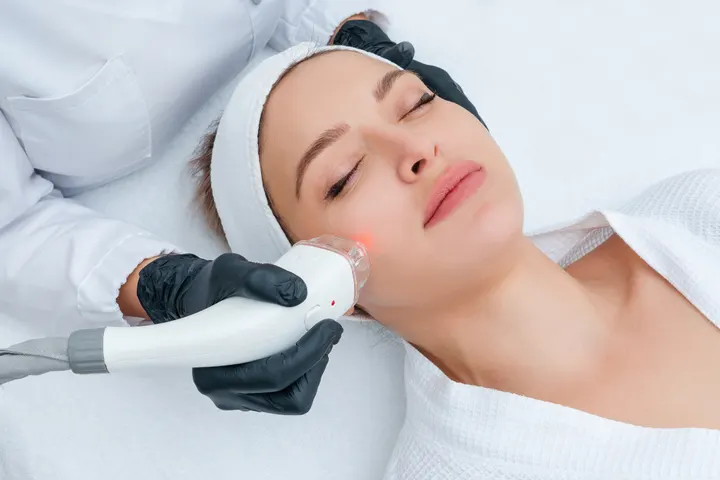 Featured · Skin
Microneedling Before and After: What Results Can You Expect?
How microneedling triggers new collagen through controlled micro-injuries, which skin concerns it improves and how soon the changes show.
By Claritza Valle · Aug 4, 2025Read article →
Sources
- U.S. Food and Drug Administration, Dermal Fillers (Soft Tissue Fillers) – approved uses including nasolabial folds and cheeks, adults 22 and older, blood vessel risk, what not to do
- FDA PMA database, P020023 Restylane Injectable Gel – approved December 12, 2003 for moderate to severe facial wrinkles and folds such as nasolabial folds
- FDA PMA database, P050047 Juvederm gel implants – approved June 2, 2006 for moderate to severe facial wrinkles and folds such as nasolabial folds
- FDA PMA database, P110033 Juvederm Voluma XC – approved October 22, 2013 for deep injection to correct age-related midface volume deficit
- U.S. Food and Drug Administration, Microneedling Devices – authorized uses including facial wrinkles in patients 22 and older, and known risks
- FDA De Novo database, DEN160029 SkinPen Precision System – De Novo decision March 1, 2018
- Stefura T et al., Aesthetic Plastic Surgery, 2021 – meta-analysis of randomized trials of nasolabial fold fillers, wrinkle severity scores to 12 months
- American Academy of Dermatology, 11 ways to reduce premature skin aging – daily SPF 30 or higher sunscreen, smoking, repeated expressions, sunglasses
- Mukherjee S et al., Clinical Interventions in Aging, 2006 – retinoids in the treatment of skin aging, tretinoin and fine wrinkling
- DailyMed, BOTOX Cosmetic (onabotulinumtoxinA) label – the four FDA-approved cosmetic indications